
Visit · A place you can go
Bank of Japan
日本銀行
Bank of Japan in brief
The Bank of Japan (日本銀行, Nippon Ginkō; BOJ) is the central bank of Japan. The bank is often called Nichigin (日銀) for short. It is headquartered in Nihonbashi, Chūō, Tokyo.
What to see
- Foundation and early development — Finance minister Matsukata Masayoshi initially proposed the creation of the bank of Japan sometime in March 1882, soon enacted in the Bank of Japan Act (Imperial Ordinance) of 27 June 1882 and…
- Financial system stability — Financial system is defined as the overall structure of receipt and payment as well as lending and borrowing of money, and its stability refers to 'a state in which the financial system functions…
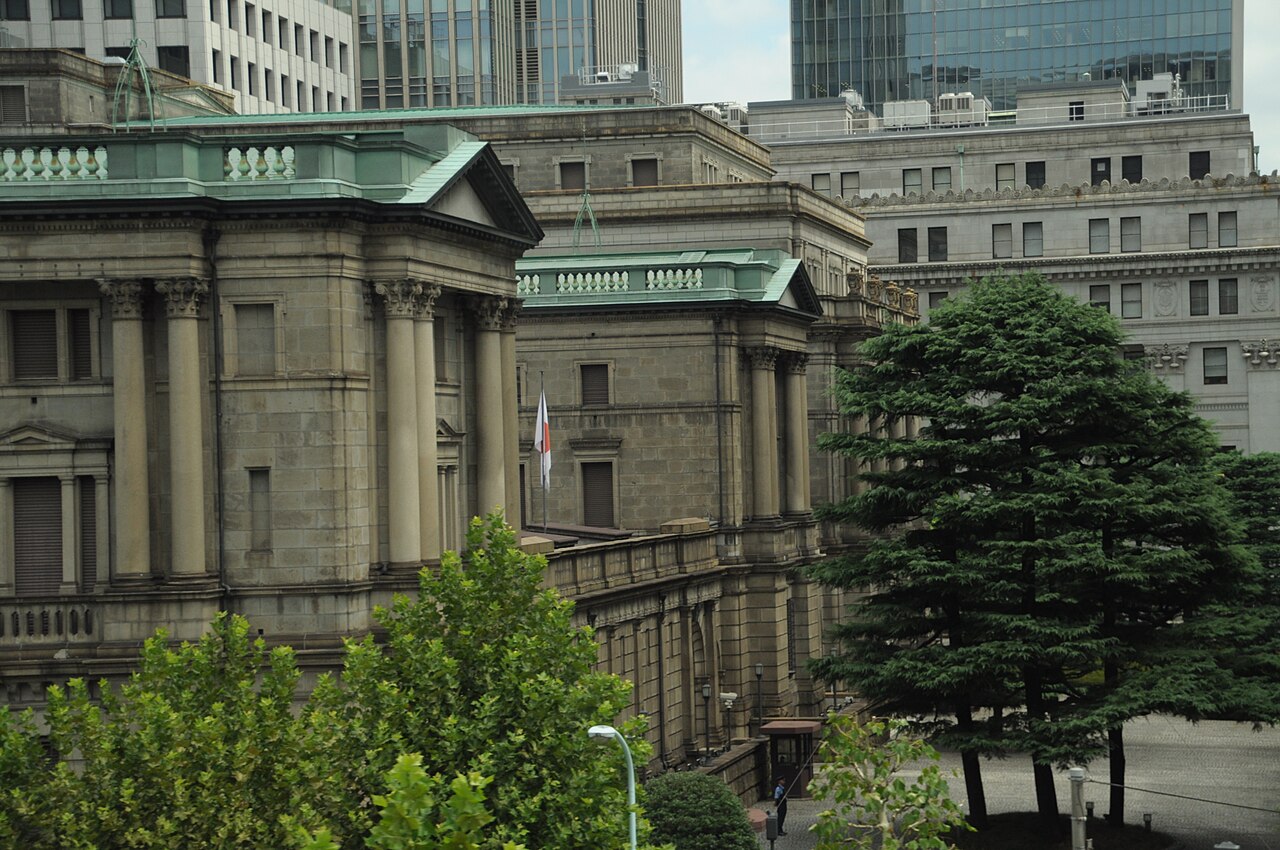
- Headquarters — The Tokyo head office building of the BOJ is located in Nihonbashi, Chuo.
About Bank of Japan
The said bank is a corporate entity independent of the Japanese government, and while it is not an administrative organisation of the state, its monetary policy falls within the scope of administration. From a macroeconomic perspective, long-term stability of prices is deemed crucial. However, the political sector tends to favour short-term measures. Thus, the bank's autonomy and independence are granted from the standpoint of ensuring long-term public welfare and political neutrality.
Foundation and early development
Finance minister Matsukata Masayoshi initially proposed the creation of the bank of Japan sometime in March 1882, soon enacted in the Bank of Japan Act (Imperial Ordinance) of 27 June 1882 and formally founded on 10 October 1882. The primary source of inspiration for the bank's design was the National Bank of Belgium (est. 1850) which was viewed as one of the best-designed European central banks of its era. Since then, the Bank of Japan has been partly privately owned. Its stock is traded over the counter, hence the stock number. A number of modifications based on other national banks were encompassed within the regulations under which the bank was founded. In 1883, all national banks were stripped of their banknote issuance privilege, and the Bank of Japan was given a monopoly on controlling the money supply in 1884. Still, it would be another 20 years before all previously issued notes were retired.
Following the passage of the Convertible Bank Note Regulations (May 1884), the Bank of Japan issued its first banknotes in 1885 (Meiji 18). Despite some small glitches—for example, it turned out that the konjac powder mixed in the paper to prevent counterfeiting made the bills a delicacy for rats—the run was largely successful. In 1897, Japan joined the gold standard, and in 1899 the former "national" banknotes were formally phased out.
In the early 20th century the Bank of Japan, while a private-sector institution, worked in close coordination with the Japanese government and took direction from the minister of Finance. Its governor, as Takahashi Korekiyo put it, was considered "the number-one representative of the business world" in Japan's institutional system.
World War II and aftermath
The Bank of Japan was reorganized in 1942 (fully only after 1 May 1942), under the Bank of Japan Act of 1942 (日本銀行法 昭和17年法律第67号), promulgated on 24 February 1942. There was a brief post-war period during the Occupation of Japan when the bank's functions were suspended, and military currency was issued. In 1949, the bank was again restructured.
In the 1970s, the bank's operating environment evolved along with the transition from a fixed foreign currency exchange rate and a rather closed economy to a large open economy with a variable exchange rate.
During the entire post-war era, until at least 1991, the Bank of Japan's monetary policy has primarily been conducted via its 'window guidance' (窓口指導, madoguchi shindō) credit controls (which are the model for the Chinese central bank's primary tool of monetary policy implementation), whereby the central bank would impose bank credit growth quotas on the commercial banks. The tool was instrumental in the creation of the 'bubble economy' of the 1980s. It was implemented by the Bank of Japan's then "Business Department" (営業局, Eigyō Kyoku), which was headed during the "bubble years" from 1986 to 1989 by Toshihiko Fukui (who became deputy governor in the 1990s and governor in 2003).
A major 1997 revision of the Bank of Japan Act was designed to give it greater independence; however, the Bank of Japan has been criticized for already possessing excessive independence and lacking in accountability before this law was promulgated. A certain degree of dependence might be said to be enshrined in the new Law, article 4 of which states:
Financial system stability
Financial system is defined as the overall structure of receipt and payment as well as lending and borrowing of money, and its stability refers to 'a state in which the financial system functions properly, and participants, such as firms and individuals, have confidence in the system'.
Functions
The aforementioned objectives are realised through the exertion of the functions mentioned below.
As the sole issuer of banknotes of Japan, BoJ carries out the issuance and management of Bank of Japan notes.
BoJ implements monetary policy through methods such as policy interest rate (formerly known as the official discount rate) operations, open market operations, and reserve requirement ratio operations, thereby adjusting the volume of money in circulation to stabilise prices and the national economy.
BoJ facilitates transactions among financial institutions using its current accounts, effectively acting as a 'bank for banks'. (Individuals and corporations (such as general businesses) are not allowed to open accounts with BoJ.)
BoJ serves as the government's bank for the disbursement and receipt of public funds.
As a 'bank of banks', BoJ ensures the stability of the financial order through smooth fund settlements via domestic exchange transactions and providing system collateral (acting as the "lender of last resort") through facilities such as BoJ's special lending programme (日銀特融, Nichigin Tokuyu). Transactions in deposits and loans are restricted to financial institutions designated in accordance with the Bank of Japan Act.
BoJ conducts international relations activities, including interventions in the foreign exchange market, with other central banks and public institutions worldwide.
BoJ collects and researches financial and economic information, and compiles and publishes economic statistics.
Headquarters
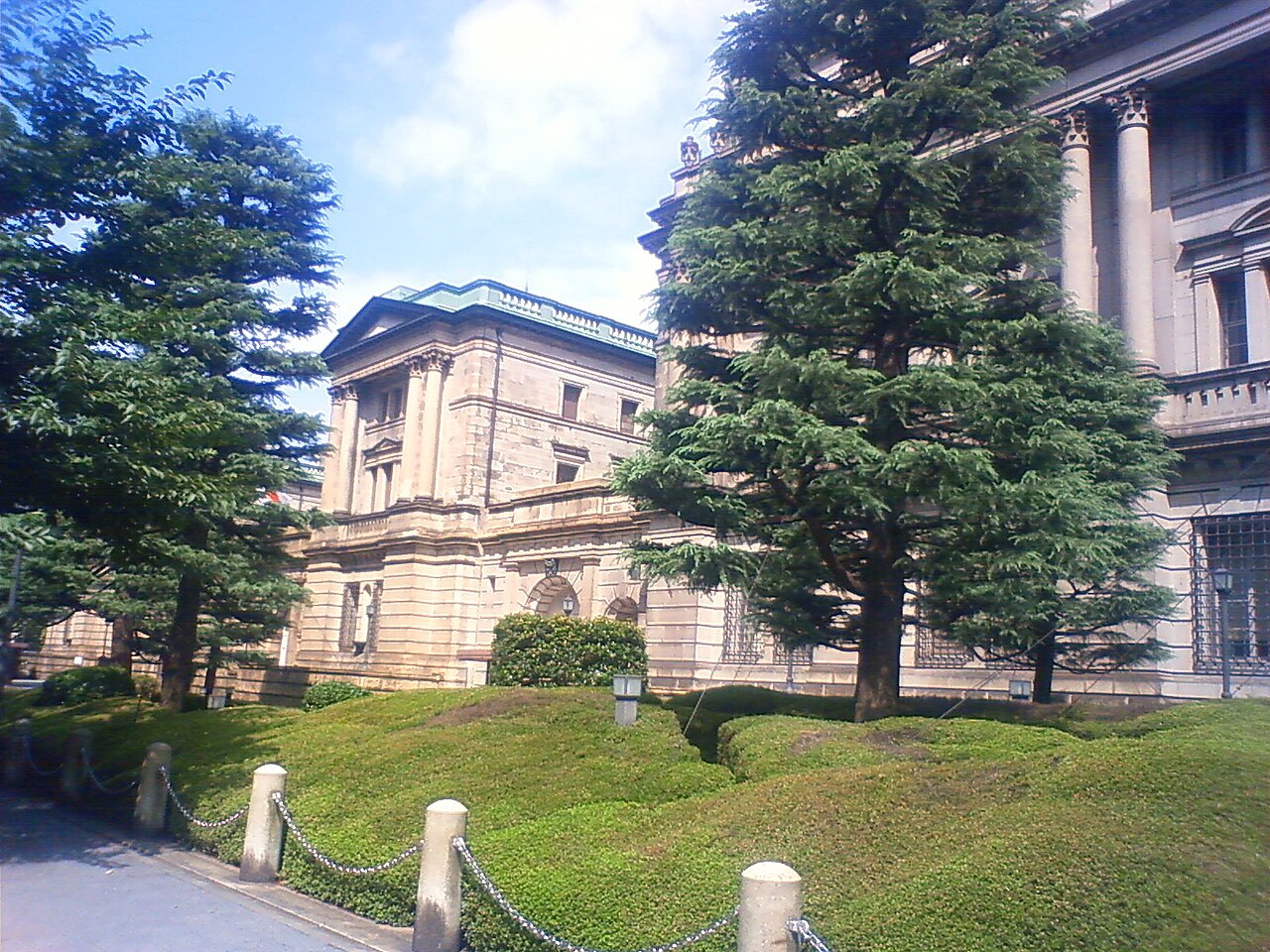
The Tokyo head office building of the BOJ is located in Nihonbashi, Chuo. It is on the site of a former gold mint (Kinza) and, not coincidentally, near the famous Ginza district, whose name means "silver mint". The building was designed by architect Tatsuno Kingo in eclectic style in 1890, and completed in 1896 under the direction of entrepreneur Shibusawa Eiichi. Tatsuno had been influenced by the architecture of the Bank of England and especially of the National Bank of Belgium (NBB)'s buildings in Brussels and Antwerp, paralleling the NBB's influence on the institutional design of the Bank of Japan.
Tatsuno's former engineer and successor as the bank's architect, Nagano Uheiji, directed repairs of the bank's building following the 1923 Great Kantō earthquake. In the 1930s, he designed extensions of the building on its northern and eastern sides, in the same eclectic style but using reinforced concrete. The eastern extension is still extant, whereas the northern extension was replaced after 30 years by a larger building designed in 1966 by Matsuda Hirata Architects. Completed in 1973 and the largest building in the complex, it has 10 floors overground and 5 floors underground. Finally, the south annex building, erected 1982–1984, is the home of Currency Museum of the Bank of Japan and of the bank’s Institute for Monetary and Economic Studies (IMES).
Branches
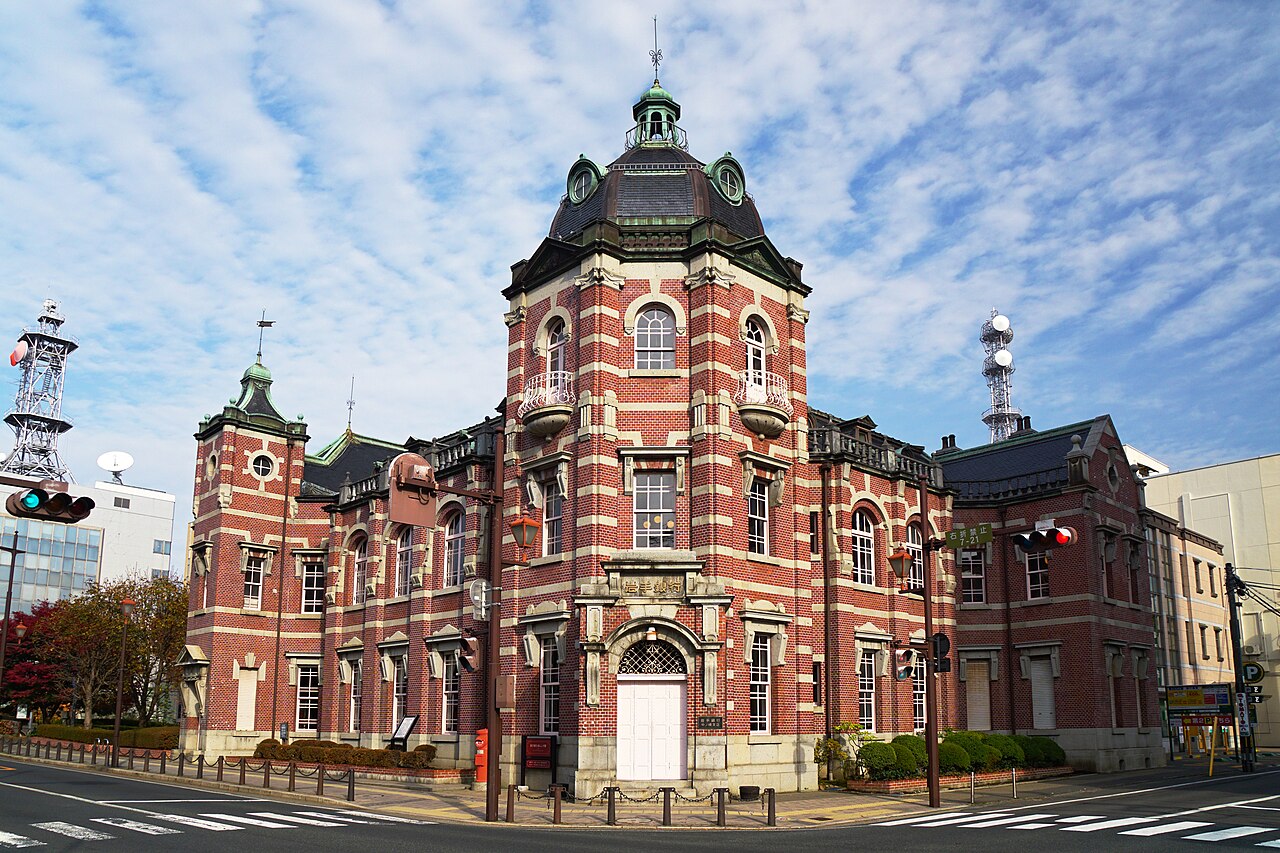
Tatsuno also designed the Bank of Japan's branch on Nakanoshima Island in Osaka, completed in 1903 and still in use following remodeling and extension in 1982, as well as the branch buildings in Kyoto (1906) and Otaru (1912), both now museums, and those no longer standing in Moji-ku, Kitakyūshū (1898), Hiroshima (1905), Nagoya (1906), Kanazawa (1909), Hakodate (1911), Fukushima (1913). In the 1920s and 1930s, Nagano designed more branch buildings in neoclassical style in Okayama (1922), Kobe (1927), Matsuyama (1932), Hiroshima (replacing Tatsuno's, 1936), and Matsue (1938).
Text adapted from Wikipedia (“Bank of Japan”), published under CC BY-SA 4.0. Source article
At a glance
- Typecentral bank, public company
- Founded1882
- HeadquartersBank of Japan Head Office, Tokyo
- Listed onTokyo Stock Exchange (8301)
- Coordinates35.68656, 139.77154 · Open in Google Maps
- Official websitehttps://www.boj.or.jp/
Sources and next steps
Opening times, exhibits and access can change. For a current visit plan, use the official website linked below. Facts and structured data: Wikidata (CC0). Article text adapted from Wikipedia under CC BY-SA 4.0 — see the credit in the article above.
- Wikidata: Bank of Japan (Q333101)
- Wikimedia Commons: 日本銀行ロゴ.svg
- Official website (carried by the record)
Plan a visit
| Location | 2-1-1 Nihonbashi-Hongokuchō, Chūō-ku, Tokyo (Bank of Japan Head Office) |
|---|---|
| Getting there | Mitsukoshimae Station (Ginza and Hanzōmon subway lines) is the closest; the head office is also walkable from Tokyo Station's Nihonbashi side. |
| Official site | https://www.boj.or.jp/en/ |
| Hours & fees | Head Office tours run on set schedules and require advance reservation through the official site; the tour programme, eligibility and calendar are published there. This guide does not carry live availability. |
What you can see
The visitable face of Japan's central bank is its Head Office in Nihonbashi: a stone neo-baroque building completed in 1896, designated an Important Cultural Property, standing where the Tokugawa shogunate's gold mint once operated. Guided tours show the historic building, the former banking hall and vault areas, and explain what a central bank actually does — issuing banknotes, running the payment system and setting monetary policy. The nearby Currency Museum, run by the Bank, displays Japanese money from ancient coins to modern notes and the anti-counterfeiting technology printed into them.
How to read the technology
Money is a technology of trust, and this visit lets you read it at three levels. The building: stone, vaults and fireproofing as physical security. The note: watermarks, holograms and micro-printing as information security, best seen in the Currency Museum's displays. The system: the Bank's explanation of settlement and note circulation shows the invisible machinery that lets strangers accept paper and numbers from each other every day. Few technology visits cover hardware, information and institutions in one short walk.
Before you go
Tours must be reserved in advance through the Bank's official site, and identification and security procedures apply at a working central bank — allow time for them and follow the instructions given with your booking. Tour availability and formats change, so treat the official site as the only timetable. The Currency Museum can usually be visited without the tour and makes a good pairing if tour places are full; confirm its opening days separately.


- DiscoverThe central bank of Japan
- NoticeFounded: 1882
- RememberBank of Japan Head Office, Tokyo
Exhibits, opening times and access can change. Check the official website before you travel.
Photograph: Bank of Japan Head Office, Tokyo - Aug 29, 2011.jpg by yt_siden · CC BY-SA 2.0 (Wikimedia Commons; hosted on this site)
Keep exploring
- Meiji Yasuda Life — Same theme: Finance, insurance & property
- Mitsubishi Estate — Same theme: Finance, insurance & property
- Mizuho Financial Group — Same theme: Finance, insurance & property
- The Dai-ichi Life Insurance Company — The makers behind it: a maker in the same field (Finance, insurance & property)
- Nippon Life Insurance Company — The makers behind it: a maker in the same field (Finance, insurance & property)
Official source · Source checked 2026-11-01 · Original English profile