
Visit · A place you can go
Miraikan
日本科学未来館
Start with a question, not just the globe
Miraikan’s Discover your Earth area turns planetary information into something people can examine together. Geo-Cosmos provides the large shared view; Geo-Scope gives visitors a way to explore datasets; Geo-Prism adds an augmented-reality layer. Their roles differ. One attracts your attention to the whole planet, another lets you investigate a specific pattern, and another helps compare information over the globe image.
Look for time as well as colour
The Geo-Cosmos guide describes cloud imagery built from weather-satellite photographs supplied daily, alongside background imagery showing seasonal changes in ice and vegetation. A changing image is therefore not automatically a live camera view. Ask which layer you are looking at and what period it represents. This is a useful habit anywhere a striking visualisation is used to communicate science.
Try a two-step investigation
The Geo-Scope guide lists subjects including migratory-bird routes and atmospheric aerosols. Pick one pattern, predict where it might be strongest, and then test your expectation against the display. Ask who supplied the data and whether it describes people, weather or living things. GIZUMO’s suggested exercise is to compare two explanations for a pattern before accepting the first story the colours seem to tell.
Plan around today’s programme
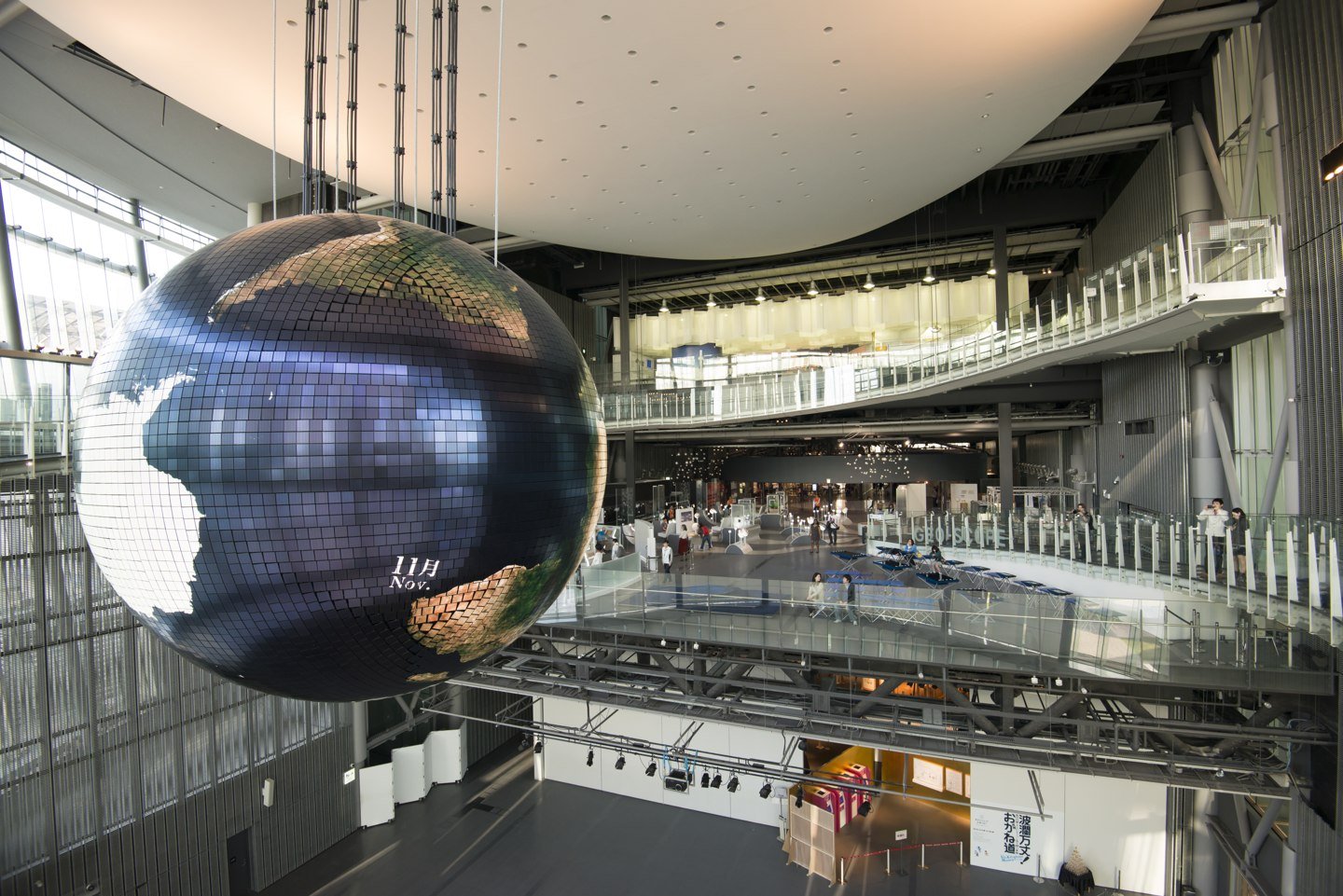
Use Miraikan’s exhibition, floor-plan and visitor pages to check which displays and activities are available for your date. The photograph here records the museum in 2013, so it is not a floor-plan reference for the present installation. This story is about reading scientific information; the museum’s current visitor information remains the place for admission, access and accessibility decisions.
Sources and next steps
Original English guide · Sources reviewed 6 October 2026. Operational details can change.
Plan a visit
| Location | 2-3-6 Aomi, Kōto-ku, Tokyo |
|---|---|
| Getting there | Telecom Center Station (Yurikamome), about a 4-minute walk; Tokyo International Cruise Terminal Station is about 5 minutes; Tokyo Teleport Station (Rinkai Line) about 15 minutes. |
| Official site | https://www.miraikan.jst.go.jp/en/ |
| Hours & fees | Not carried here — Miraikan closes on some Tuesdays and holidays; check the official site for the calendar, hours and ticket information before you go. |
Before you go — and how to use the building
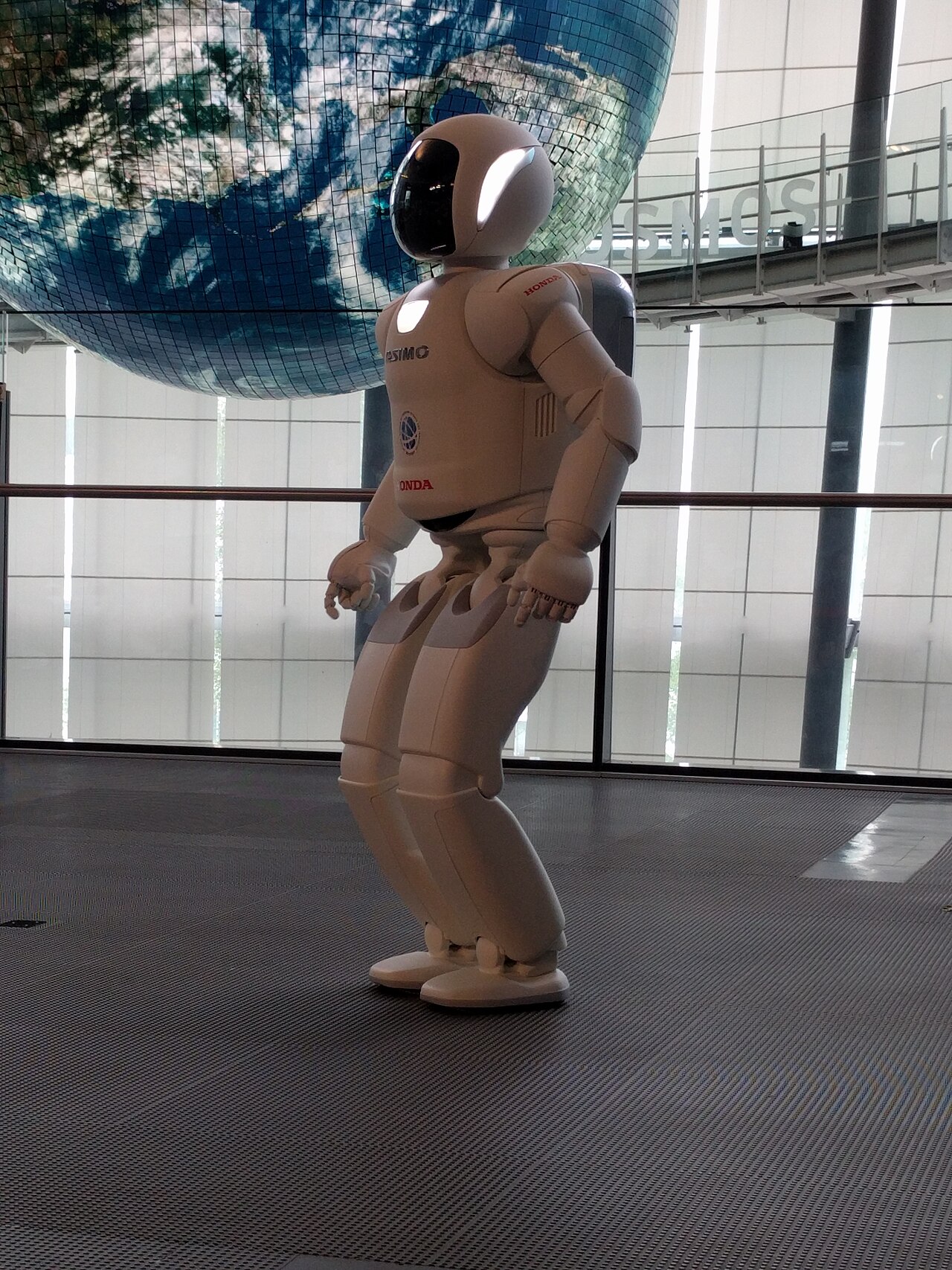
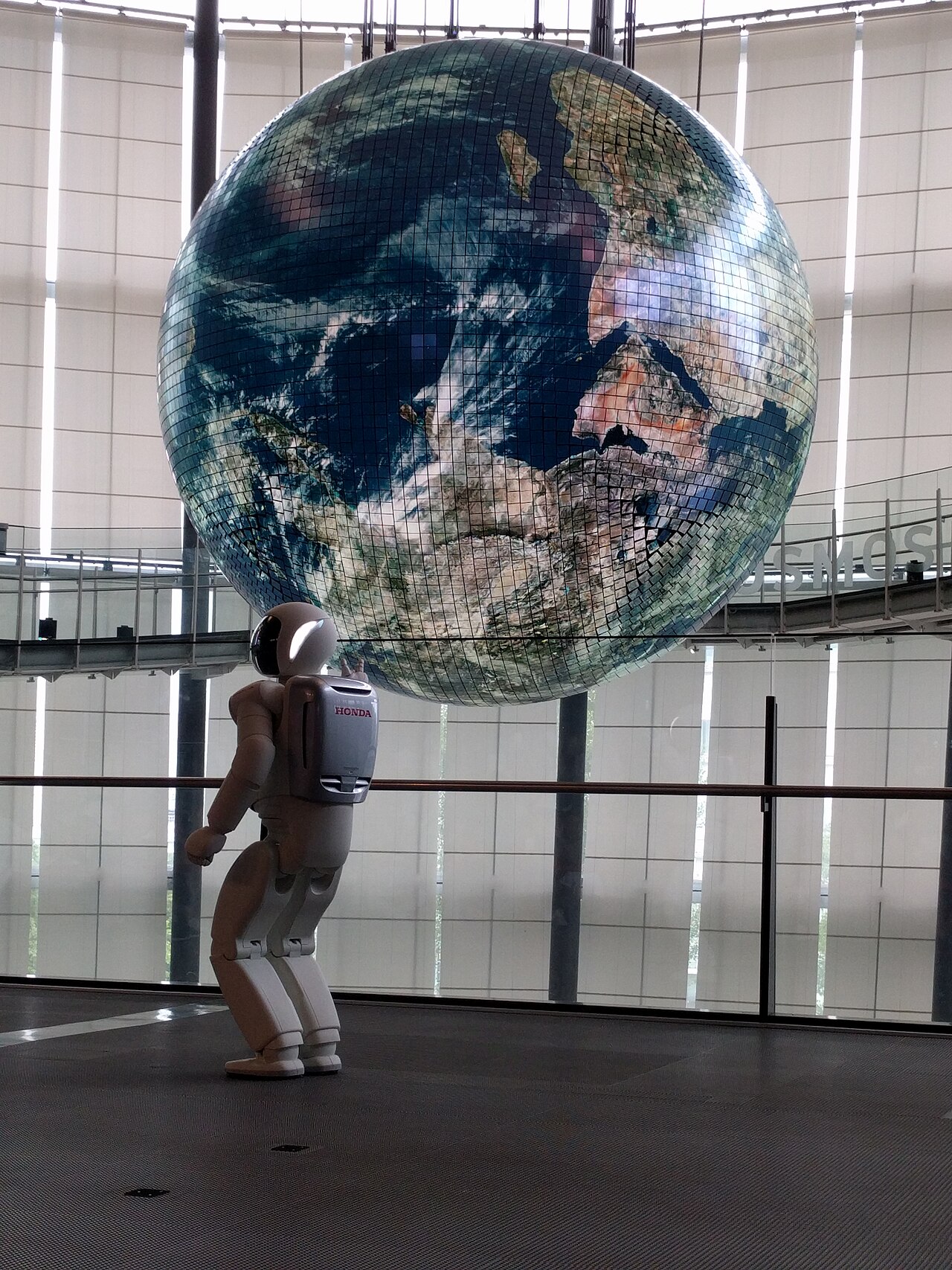
Miraikan, the National Museum of Emerging Science and Innovation, is not a collection of old machines: its permanent exhibitions are built around questions — how the Earth’s systems connect, how robots share space with people, how the brain and the internet change each other. Start under the Geo-Cosmos, the museum's symbol, a globe of more than ten thousand LED panels fed with real Earth-observation data, then work outward through the exhibition floors. Demonstrations and science-communicator talks run through the day, and the schedule matters more than the floor plan, so check the day's timetable on the official site first and build your visit around two or three demonstrations rather than trying to read every panel.


- DiscoverEmerging science and innovation
- NoticeGeo-Cosmos Earth display
- RememberTokyo
Exhibits and access can change. This preview does not offer product procurement, commercial specifications or live visitor information.
Miraikan’s Geo-Cosmos in 2013. Historical exhibition photograph; current displays may differ. Maarten Heerlien · CC BY 2.0 · Photo details
Keep exploring
- National Museum of Nature and Science — Same theme: Earth, science & museums
- Nagoya City Science Museum — Same theme: Earth, science & museums
- Osaka Science Museum — Same theme: Earth, science & museums
- A-1 Pictures — The makers behind it: a maker in the same region (Kanto)
- A Bathing Ape — The makers behind it: a maker in the same region (Kanto)
Official source · Source checked 2026-10-06 · Original English guide