
Visit · A place you can go
National Museum of Nature and Science
国立科学博物館
National Museum of Nature and Science in brief
The National Museum of Nature and Science (国立科学博物館, Kokuritsu Kagaku Hakubutsukan) is in the northeast corner of Ueno Park in Tokyo. The museum has exhibitions on pre-Meiji science in Japan. It is the venue of the taxidermied bodies of the legendary dogs Hachikō and Taro and Jiro.
What to see
- Designated Cultural Properties — The following items in the collection are designated as national Important Cultural Properties.
- History — Opened in 1877, it has had several names, including Ministry of Education Museum, Tokyo Museum, Tokyo Science Museum, the National Science Museum of Japan, and the National Museum of Nature and…
About National Museum of Nature and Science
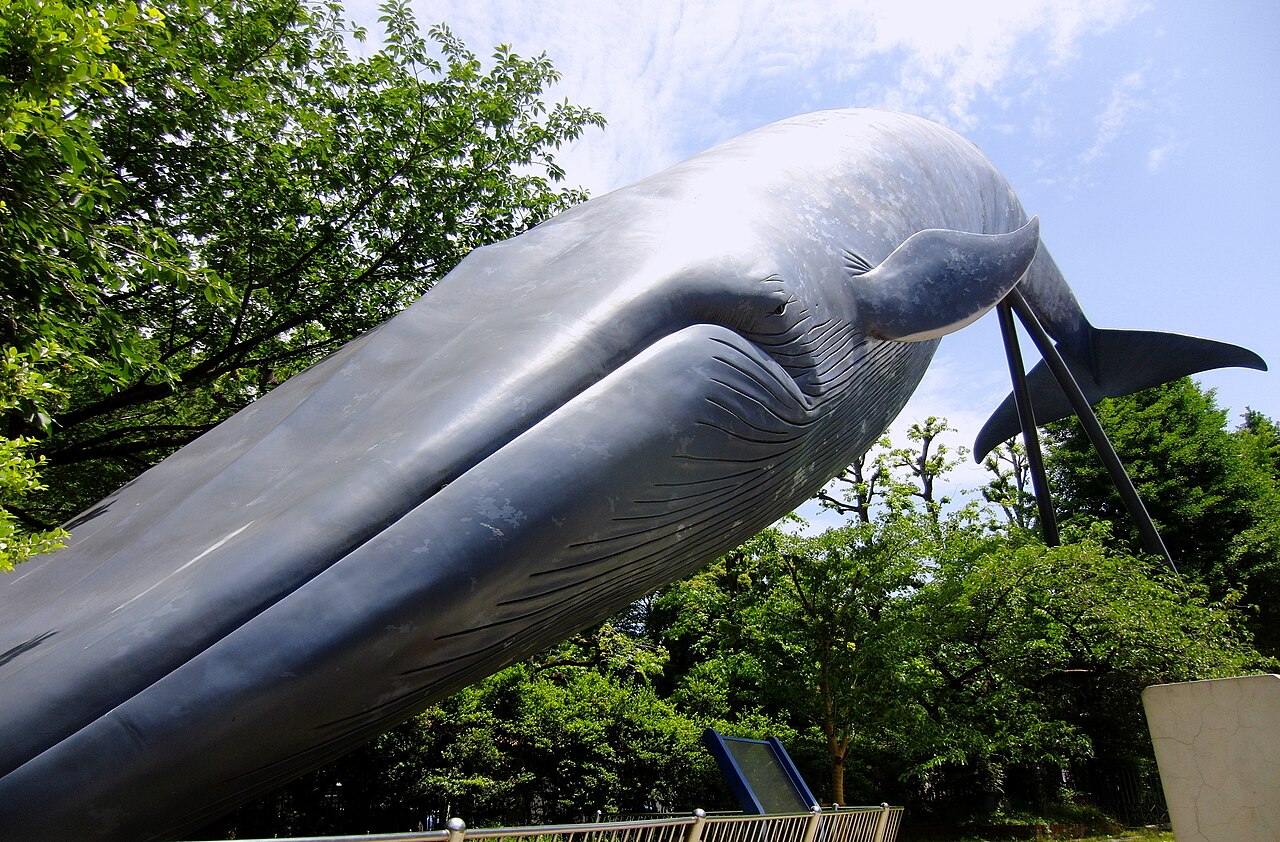
A life-size blue whale model and a steam locomotive are also on display outside.
History
Opened in 1877, it has had several names, including Ministry of Education Museum, Tokyo Museum, Tokyo Science Museum, the National Science Museum of Japan, and the National Museum of Nature and Science as of 2007. It was renovated in the 1990s and 2000s, and offers a wide variety of natural history exhibitions and interactive scientific experiences.
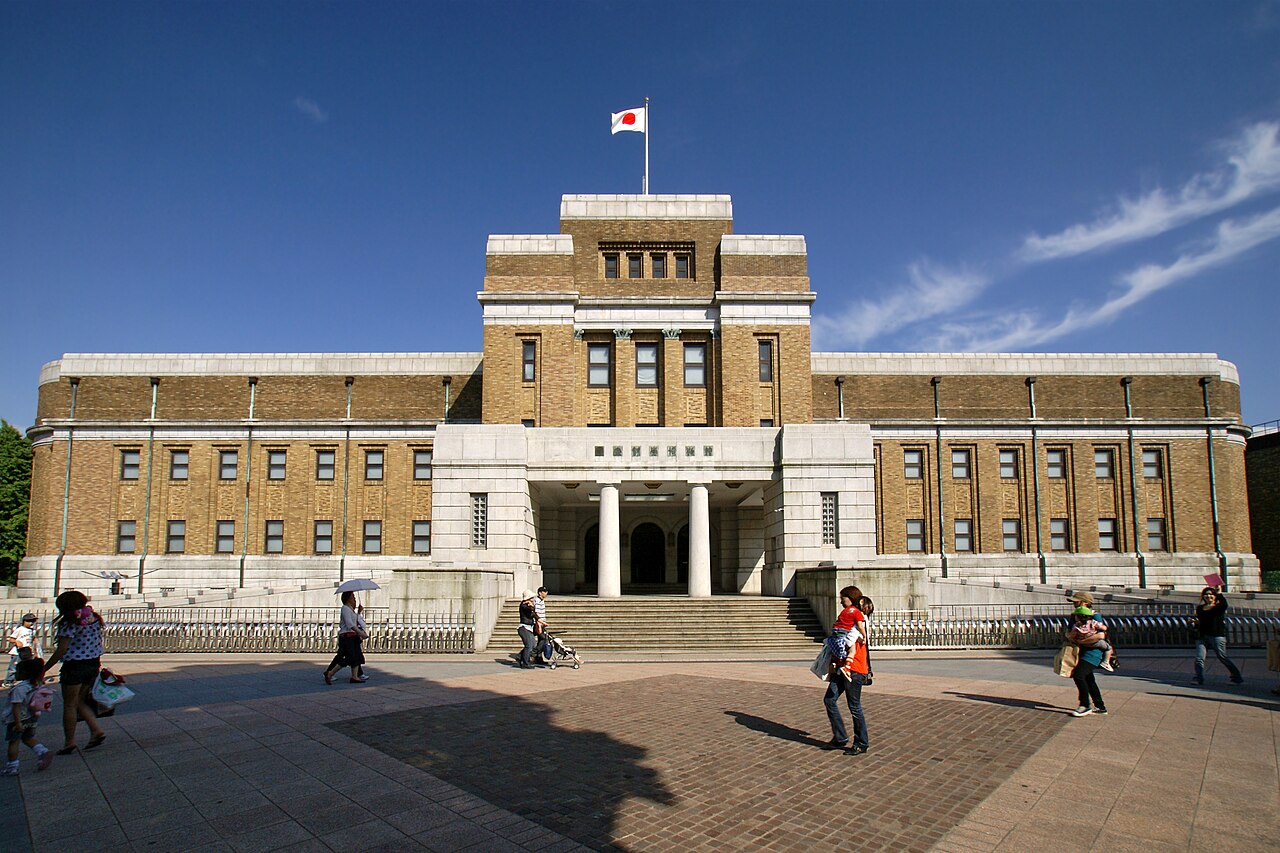
It was completed as the main building of the Tokyo Science Museum in September 1931 as part of the reconstruction project after the Great Kanto Earthquake in Neo-Renaissance style. Designed by Kenzo Akitani, an engineer of the Ministry of Education, Culture, Sports, Science and Technology, Building Division. The building is the most visited museum in Japan, and looks like an airplane when viewed from above. In addition to the exhibition hall, it has facilities such as a dome for astronomical observation and an auditorium.
It is designed to withstand earthquakes of the Great Kanto Earthquake class, and it is said that there is no problem in light of the current Building Standards Act standards.
In 2021, the museum organized the Pokémon Fossil Museum, a travelling exhibition based on the Pokémon franchise, in collaboration with The Pokémon Company. The exhibition opened at the Mikasa City Museum in Mikasa, Hokkaido, Japan, on 4 July 2021, and remained there until 20 September. It has since been hosted by several other museums across Japan, including the National Museum of Nature and Science, which hosted it from 15 March to 19 June 2022. A virtual tour of the exhibit as it appeared in the museum was also made available online.
Number of materials
Of these, approximately 14,000 are on permanent display. Others are stored and researched in the Tsukuba area.
Department of Science and Engineering – 38,815 items
About 100,000 items are newly collected each year.
Designated Cultural Properties
The following items in the collection are designated as national Important Cultural Properties.
Celestial Globe and Globe by Shibukawa Shunkai (with two old pedestal boards)
Myriad year clock made in 1695, celestial globe made in 1697.
Made in 1851. Owned by Toshiba. In 1931, it was deposited at the Tokyo Science Museum (predecessor of the National Museum of Nature and Science). Exhibited on the 2nd floor of the Earth Pavilion.
Astronomical telescope (8-inch flexure equatorial mount) made in UK.
Made by Troughton & Sims. The first full-scale and largest telescope imported to Japan. Used by the NAOJ until 1967.
Milne horizontal pendulum seismograph (Appendix: Earthquake Record Vol. 41)
The oldest existing seismograph in Japan. It was installed in 1899 on the Tokyo Imperial University campus. Invented by Milne, a mining engineer and seismologist from England.
Sogeograph (tin foil gramophone), made in England (attached: wooden box)
The first phonograph introduced to Japan. On 16 November 1878, at the Hitotsubashi laboratory of the University of Tokyo Faculty of Science, the first sound recording was made in Japan.
Construction of the building was completed in September 1931 as the main building of the Tokyo Science Museum as part of the reconstruction project following the Great Kanto Earthquake. It was designed in the Neo-Renaissance style. Designed by Kenzo Kasuya, an engineer in the Ministry of Education Minister's Secretariat's Architecture Division, the building was designated an Important Cultural Property on 9 June 2008.
Nihonkan (Japan Gallery)
The theme of the Ueno Main Building is "Aiming for the coexistence of humankind and nature", and consists of two exhibition halls, the Japan Pavilion and the Earth Pavilion.
Chikyūkan (Global Gallery)
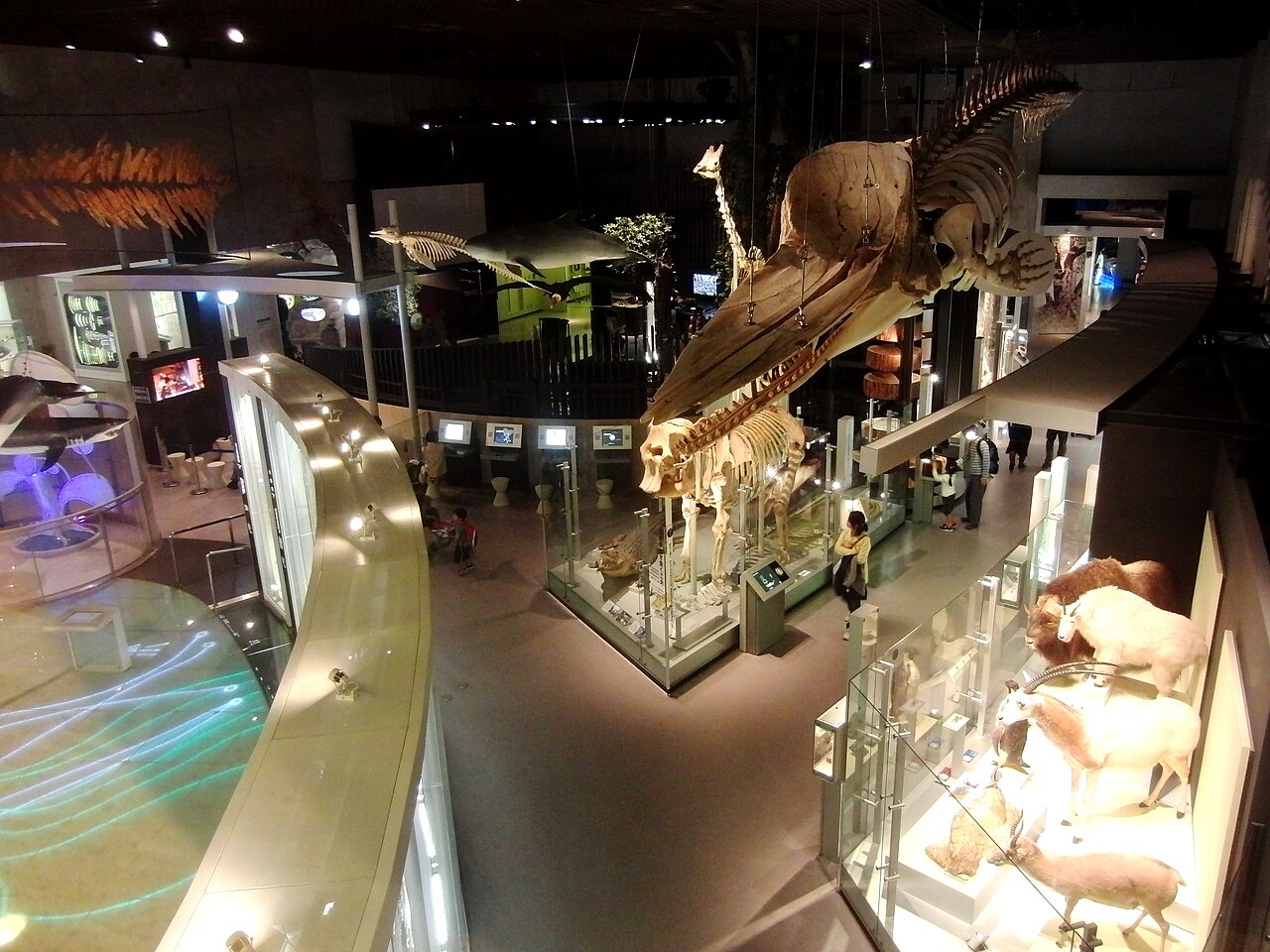
The theme is "History of Earth Life and Mankind". The exhibition area is 3 floors above ground and 3 floors below ground. The first phase of construction was completed in 1998. The permanent exhibition will be open to the public from 24 April, the following year. Grand opening on 2 November 2004 after the completion of the second phase of construction. The renovation work of the north exhibition hall started in September 2014, and the construction was completed the following year, and the grand opening was held on 14 July.
Text adapted from Wikipedia (“National Museum of Nature and Science”), published under CC BY-SA 4.0. Source article
At a glance
- Typenational museum, science museum
- Recorded inception1877
- Heritage statusImportant Cultural Property of Japan
- MunicipalityUeno-kōen
- Address〒110-8718東京都台東区上野公園7番20号
- Coordinates35.71632, 139.77654 · Open in Google Maps
- Official websitehttp://www.kahaku.go.jp/
About the photograph
The photograph above is the Wikimedia Commons file “NMNC01s3200.jpg”, credited to 663highland and published under CC BY 2.5. Its Commons description reads: “国立科学博物館日本館.” It is a reference photograph; conditions, displays and surroundings change, and it may not show the site as a visitor finds it today.
Sources and next steps
Opening times, exhibits and access can change. For a current visit plan, use the official website linked below. Facts and structured data: Wikidata (CC0). Article text adapted from Wikipedia under CC BY-SA 4.0 — see the credit in the article above.
- Wikidata: National Museum of Nature and Science (Q74940)
- Wikimedia Commons: NMNC01s3200.jpg
- Official website (carried by the record)
Plan a visit
| Location | 7-20 Ueno Park, Taitō-ku, Tokyo |
|---|---|
| Getting there | JR Ueno Station (Park exit), a few minutes' walk; also served by Keisei Ueno and subway Ueno stations. |
| Official site | http://www.kahaku.go.jp/ |
| Hours & fees | Not carried here — check the official site for opening days, hours, fees and special-exhibition tickets before you go. |
What you can see
Japan's national science museum divides itself in two. The Japan Gallery follows the archipelago itself: the animals, plants, geology and human history of these islands, including the famous Hachikō specimen and fossils found in Japanese strata. The Global Gallery follows the larger story — evolution of life, the universe, and the history of science and technology, where a steam locomotive, early computers, clocks, aircraft and the Zero fighter's engineering sit in the same narrative as dinosaurs and deep-sea creatures. Add the Theater 360 spherical projection and regular special exhibitions, and this is the deepest single science collection in the country.
How to read the technology
Read the technology exhibits as answers to limits. The clock collection shows precision mechanics before electronics; the aviation and engine displays show power-to-weight as the governing problem; the computing exhibits show miniaturisation as a materials problem as much as a logic problem. Because the museum places machines inside a natural-history frame, you keep noticing that every technology here is a negotiation with physics and resources — a useful correction to any 'invention list' way of seeing Japanese technology.
Before you go
The two galleries are large enough that a complete visit takes most of a day; choosing one gallery and one special exhibition is a better plan than rushing both. Ueno Park contains several other national museums within a few minutes' walk, so the area rewards a planned museum day. School groups make weekday mornings busy in term time. Confirm closing days, reservation needs and special-exhibition arrangements on the official site.


- DiscoverNational Science Museum in Tokyo, Japan
- NoticeRecorded inception: 1877
- RememberTokyo
Exhibits, opening times and access can change. Check the official website before you travel.
Photograph: NMNC01s3200.jpg by 663highland · CC BY 2.5 (Wikimedia Commons; hosted on this site)
Keep exploring
- Miraikan — Same theme: Earth, science & museums
- Nagoya City Science Museum — Same theme: Earth, science & museums
- Osaka Science Museum — Same theme: Earth, science & museums
- A-1 Pictures — The makers behind it: a maker in the same region (Kanto)
- A Bathing Ape — The makers behind it: a maker in the same region (Kanto)
Official source · Source checked 2026-10-31 · Original English guide