
Makers · A Japanese technology maker
Sega AM2
SEGA-AM2
Sega AM2 in brief
Sega AM Research & Development No. 2, previously known as SEGA-AM2 Co., Ltd., is a video game development team within the Japanese multinational video game developer Sega. Yu Suzuki, who had previously developed arcade games for Sega including Hang-On and Out Run, was the first manager of the department.
Known for its technology
- Games — AM2 games include Daytona USA, Virtua Fighter, OutRun, Virtua Cop, Virtua Striker, Fighting Vipers, Shenmue, Scud Race, Sonic the Fighters, 18 Wheeler: American Pro Trucker, F355 Challenge,…
- Merge into Sega and years since — During mid-2004, Sammy Corporation bought a controlling share in Sega and created the new company Sega Sammy Holdings, an entertainment conglomerate.
- Establishment of AM2 and years as a department — Some time after the release of Power Drift, Sega began to separate the amusement division into the Amusement Machine Research and Development teams, or AM teams.
About Sega AM2
AM2's first game produced was 1992's Virtua Racing, followed by the highly popular Virtua Fighter and Daytona USA. Through the remainder of the 1990s, they developed more arcade titles and focused on fighting and racing games. AM2 was placed under the management of CSK Research Institute in 2000, and a year later became SEGA-AM2 Co., Ltd. Their development of Shenmue was over budget and cost millions of dollars, and despite positive reviews and good sales was unable to become profitable.
Suzuki was promoted and left AM2 in 2003; Hiroshi Kataoka became the head of AM2. A year later Sega was acquired by Sammy Corporation and AM2 was merged back into Sega. Since, the team has continued work on arcade games such as Border Break and the Hatsune Miku: Project DIVA series, as well as smartphone games in Japan. Several games produced by Sega AM2 have influenced and innovated the video game industry from a technical and developmental perspective.
Establishment of AM2 and years as a department
Some time after the release of Power Drift, Sega began to separate the amusement division into the Amusement Machine Research and Development teams, or AM teams. Suzuki was made general manager of Research and Development No. 2, or Sega AM2. According to Suzuki, Sega employed approximately 600 people in research and development, and that AM2 began as a group of around 100 people. He has also stated the reason for this separation was the advent of advanced computer graphics technology. Around the time of AM2's formation, Suzuki's team moved back into the main office, then to an annex a short walk from the office. Even so, Suzuki worked with a desire of secrecy, so much so that Sega president Hayao Nakayama was denied entry on one occasion.
Merge into Sega and years since
During mid-2004, Sammy Corporation bought a controlling share in Sega and created the new company Sega Sammy Holdings, an entertainment conglomerate. Since then, Sega and Sammy became subsidiaries of the aforementioned holding company, with both companies operating independently, while the executive departments merged. Prior to the acquisition by Sammy, Sega began the process of re-integrating its subsidiaries into the main company, which was completed by October 2004. Sega would also restructure the development studios again, consolidating the divisions further into the Global Entertainment, Amusement Software, and New Entertainment R&D divisions.
AM2 continued to develop games after the merger. The console version of Virtua Fighter 5 was released in 2007. An upgrade, Virtua Fighter 5 R, was released the following year only for arcades. The last release of the Virtua Fighter franchise was the console port of Virtua Fighter 5: Final Showdown, the final iteration of the game. Ghost Squad, in the style of Virtua Cop, received a port to the Wii in 2008. AM2 has developed games for the Hatsune Miku: Project DIVA series, as well as a number of free-to-play smartphone games in Japan, such as Soul Reverse Zero. Some titles have been developed for consoles as well, such as Hatsune Miku: Project Diva Mega 39’s for Nintendo Switch. AM2 became involved with the Hatsune Miku license with items for Virtua Fighter 5 R and the racing game R-Tuned: Ultimate Street Racing. When the PSP game Hatsune Miku: Project DIVA was in development, it was decided that AM2 would develop an arcade version as well as develop the holographic imagery for Hatsune Miku's live concerts. The visuals for these projects were based on the Virtua Fighter 5 engine. Makoto Osaki called this period the most stressful for him since Shenmue.
A major success for AM2 has been Border Break. The game was partly developed because the development team felt envious of the Virtua Fighter 5 team and wanted to develop a competitive game as well. The arcade release in 2009 was continuously updated, with releases Border Break Union in 2012, Border Break Scramble in 2015, and Border Break X in 2017—with a PlayStation 4 version released in 2018. Port requests have been there since the beginning, however Sega remained concerned that people stop going to arcade if it didn't remain arcade exclusive, only after the decrease of arcades across Japan and receiving player comments that they needed drive several hours to get to an arcade, it was decided that the game would receive a PlayStation 4 port. In 2019, Border Break celebrated its 10th Anniversary.
Other titles from AM2 to get long-term support in arcades are Quest of D, Sega Network Taisen Mahjong MJ, and Shining Force Cross. Hiroshi Kataoka likened the basic enjoyability of these network-based arcade games to those of an MMO, but collectible cards and a community differentiated these from the usually solitary MMO experience on PC. According to Sega Amusement International CEO Paul Williams, these types of core games are only possible in Japan due to Sega owning their own chains and being able to kickstart an online infrastructure. The latest effort, Soul Reverse, was born out of the desire to create a fantasy version of Border Break. It lasted a year, launching in 2018 with its network features shutting down in 2019. The game was not well received by the Japanese arcade player base. It took four years to produce. Currently running arcade games with AM2 staff working on them are KanColle Arcade, Fate/Grand Order Arcade as well as an updated version of Virtua Fighter 5, Virtua Fighter 5: Ultimate Showdown, co-developed with Ryu Ga Gotoku Studio. As of 2024, AM2 was consolidated under the jurisdiction of RGG Studio and Masayoshi Yokoyama.
As of 2014, Hiroshi Kataoka was still in charge of AM2. Currently he is an executive for Sega supervising arcade engineers and the technology backend of all Sega games.
Games
AM2 games include Daytona USA, Virtua Fighter, OutRun, Virtua Cop, Virtua Striker, Fighting Vipers, Shenmue, Scud Race, Sonic the Fighters, 18 Wheeler: American Pro Trucker, F355 Challenge, Outtrigger, and Soul Reverse. AM2 has also developed smartphone games in Japan. The Virtua Fighter series is the highest-grossing AM2 game in Japanese arcades. The Hatsune Miku: Project Diva series has sold over 6 million units as of 2018. As of March 2012, Border Break had grossed JP¥8.1 billion from arcade machine sales, equivalent to more than US$100 million.
Journalists have praised AM2 as "legendary", in particular under Suzuki. According to Aaron Souppouris of Engadget, AM2 in the past developed games that defined their genres, and called the department Sega's "most-storied division". While lamenting the changes in development focus in recent years, Souppouris called the Hatsune Miku series "admittedly excellent". In 1995, Edge called Suzuki "the legendary head of AM2, Sega's core coin-op operation". Also in 1995, Next Generation stated that AM2's unusual repeated success came from its ability to release high-quality games on a regular basis. IGN's Travis Fahs stated that "[f]or as long as Sega has had internal studios, AM2 has been the favorite son of the arcade division... Without AM2, Sega would not have been able to dominate the arcades the way that they did." The researcher Ken Horowitz wrote that AM2 became the most well-known of Sega's in-house development teams and that the studio produced "ground-breaking classics".
Text adapted from Wikipedia (“Sega AM2”), published under CC BY-SA 4.0. Source article
At a glance
- Typevideo game developer
- Founded1983
- Dissolved2004
- HeadquartersTokyo
- Industryvideo game industry
- Official websitehttp://www.sega-am2.co.jp:80/
About the photograph
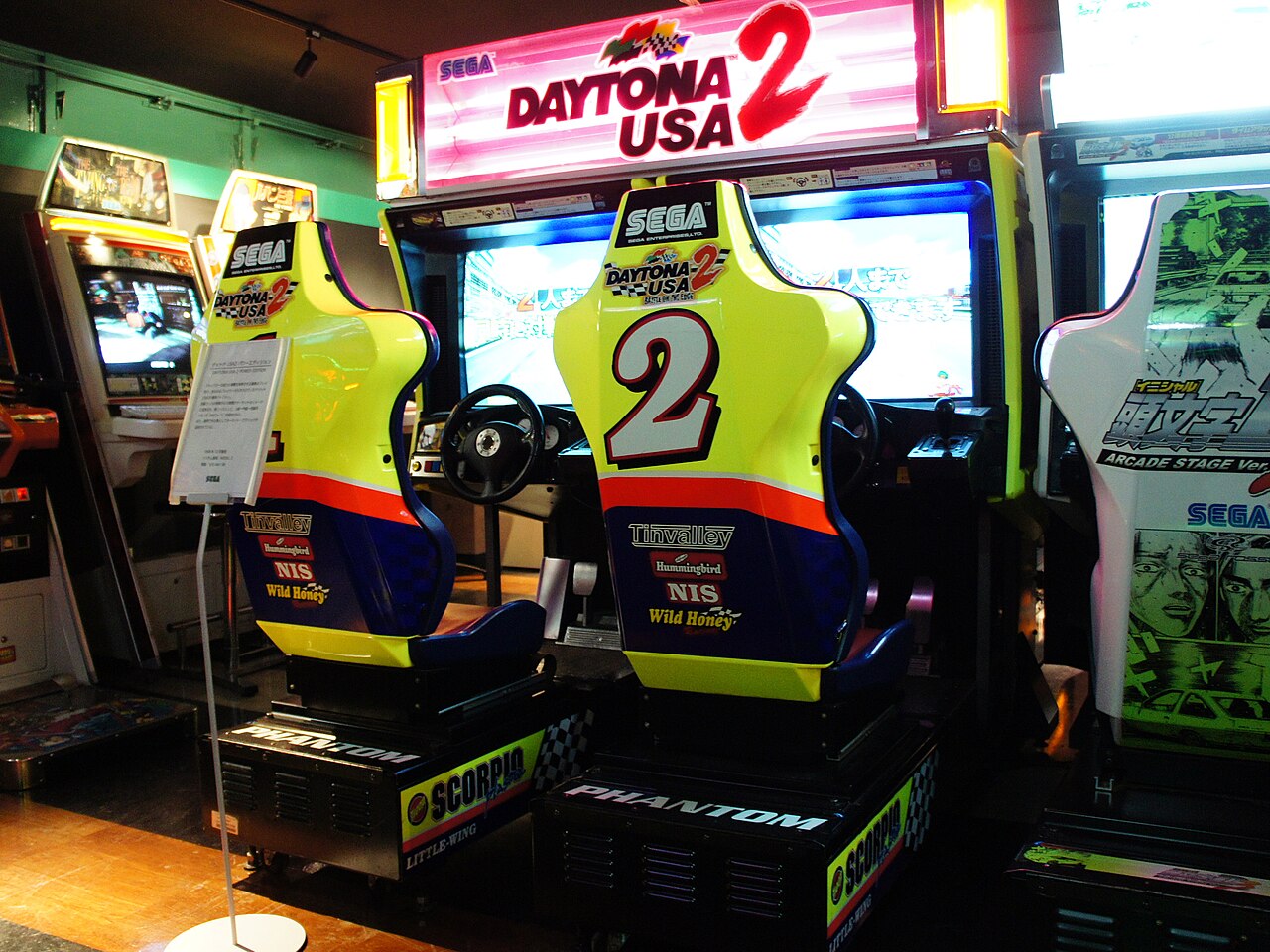
The photograph above is the Wikimedia Commons file “Daytonausa2.jpg”, credited to 空練 and published under CC BY-SA 3.0. Its Commons description reads: “SEGA's DAYTONA USA2.” It is used only because that record names this company; it may show a headquarters building or a facility rather than the company’s products, and it may not show the site as it looks today.
Sources and next steps
Company details, products and services can change. For current information, use the official website linked below. Facts and structured data: Wikidata (CC0). Article text adapted from Wikipedia under CC BY-SA 4.0 — see the credit in the article above.
- Discovervideo game industry
- NoticeFounded: 1983
- RememberTokyo
Company information can change. This guide is an English introduction to the company and its technology, not a product catalogue or financial report.
Photograph: Daytonausa2.jpg by 空練 · CC BY-SA 3.0 (Wikimedia Commons; hosted on this site)
Keep exploring
- Bandai — Same theme: Games & interactive media
- Creatures — Same theme: Games & interactive media
- Konami — Same theme: Games & interactive media
- Bank of Japan — See it in person: a place to visit in the same region (Kanto)
- Miraikan — See it in person: a place to visit in the same region (Kanto)
Official source · Source checked 2026-11-01 · Original English profile